
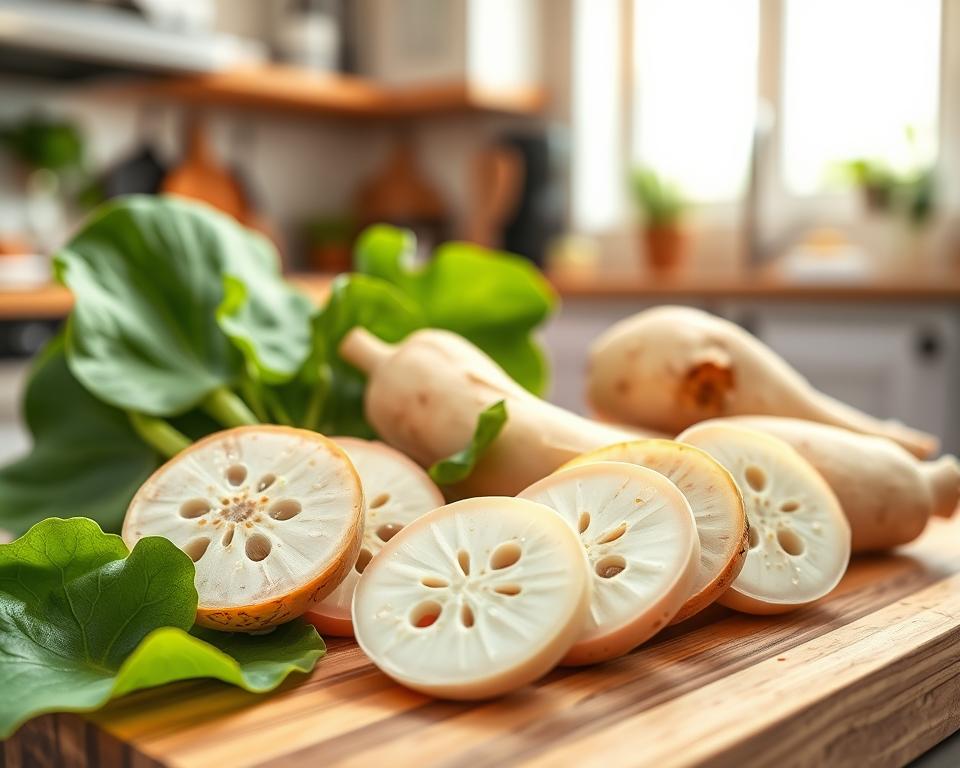
Lotus root is becoming a superfood because of its great nutritional value. It’s full of important vitamins and minerals. Lotus seeds offer many health benefits, making them a smart choice for your meals.
Lotus seeds are rich in vitamins like Vitamin B1 (Thiamine) and Vitamin E. These vitamins help your body produce energy and fight off free radicals. They also have minerals like magnesium, potassium, and manganese, which are good for your heart and bones.
Being vegan, gluten-free, and low in calories, lotus seeds are perfect for a healthy snack. They’re a great option for those who want to eat well without compromising on taste.
Key Takeaways
- Lotus seeds are rich in vitamins and minerals, providing many health benefits.
- They are vegan, gluten-free, and low in calories, making them a great dietary addition.
- Lotus root is gaining recognition as a superfood due to its nutritional profile.
- The seeds are high in magnesium, potassium, and manganese, supporting heart and bone health.
- Incorporating lotus seeds into your diet can enhance your overall well-being.
“Health Benefits of Lotus: A Nutrient-Rich Traditional Food”
The lotus plant is known for its many health benefits. It’s packed with nutrients. You can enjoy lotus in teas, soups, and even in special recipes.
Nourishing Body and Mind
Lotus seeds are full of antioxidants. They’ve been used to help with kidney problems. The lotus also helps with digestion, boosts your immune system, and fights inflammation.
Adding lotus to your meals is easy and tasty. You can use lotus leaves in soups or make tea. Lotus flower recipes let you explore its beauty and health benefits. By eating lotus, you nourish your body and connect with a long-standing tradition of wellness.
FAQ
What are the health benefits of consuming lotus seeds?
Lotus seeds are packed with vitamins and minerals. They help with energy, antioxidants, heart health, blood pressure, and bone health. Plus, they’re vegan, gluten-free, and low in calories.
How do lotus seeds support digestion and immune function?
The fiber in lotus seeds aids digestion. The vitamins and minerals boost immune function. This helps with overall wellness.
What are the medicinal properties of the lotus plant?
The lotus plant, including seeds, leaves, and roots, is used in traditional Asian medicine. It has antioxidant, kidney, and anti-inflammatory properties.
How can you incorporate lotus into your diet?
Use lotus leaves in teas or soups. Enjoy lotus flowers in various dishes. Roast lotus seeds for a healthy snack. Prepare lotus root in many ways to show the plant’s versatility.
Are lotus seeds a good source of essential nutrients?
Yes, lotus seeds are rich in Vitamin B1 (Thiamine) and Vitamin E. They also have magnesium, potassium, and manganese. They’re a nutritious part of a balanced diet.
What are the benefits of lotus root for the skin?
Lotus root may benefit the skin, though benefits vary. Its antioxidants and nutrients support overall skin health.